
«Eco degli Angeli che cantano “Exultasti” | Nasce il silenzio da molte quiete | Così la luce delle stelle si tesse in corde | Con cui le Potenze di pace fanno dolce armonia. […] Ciò che conoscete solo indistintamente è stato fatto | Su nelle corti luminose e azzurre vie: | Inchinatevi nella vostra lode; | Perché se il vostro sottile pensiero | Non vede che in parte la sorgente di misteri | Pure nei vostri canti, siete ordinati di cantare: | “Gloria! Gloria in excelsis | Pax in terra nunc natast”. | Angeli, che proseguono con il loro canto: | Pastori e re, con agnelli e incenso | Andate ed espiate l’ignoranza dell’umanità: | Con la vostra mirra rossa fate sapore dolce. | Ecco, che il figlio di Dio diventa l’elemosiniere di Dio. | Date questo poco | Prima che Egli vi dia tutto.»
Ezra Pound, Prologo di Natale – Christmas Prologue
Echo of the angels singing “Exultasti:” | Silence is born of many peaceful things, | Thus is the starlight woven into strings | Whereon the Powers of peace make sweet accord. […] That which ye know but dimly hath been wrought | High in the luminous courts and azure ways: | Bend in your praise; | For though your subtle thought | Sees but in part the source of mysteries, | yet are ye bidden in your songs, sing this: | “Gloria! gloria in excelsis | Pax in terra nunc natast” | Angel continuing in song: | Shepherds and kings, with lambs and frankincense | Go and atone for mankind’s ignorance: | Make ye soft savour from your ruddy myrrh. | Lo, how God’s son is turned God’s almoner. | Give ye this little | Wre he give ye all.
i migliori auguri di Buone Feste

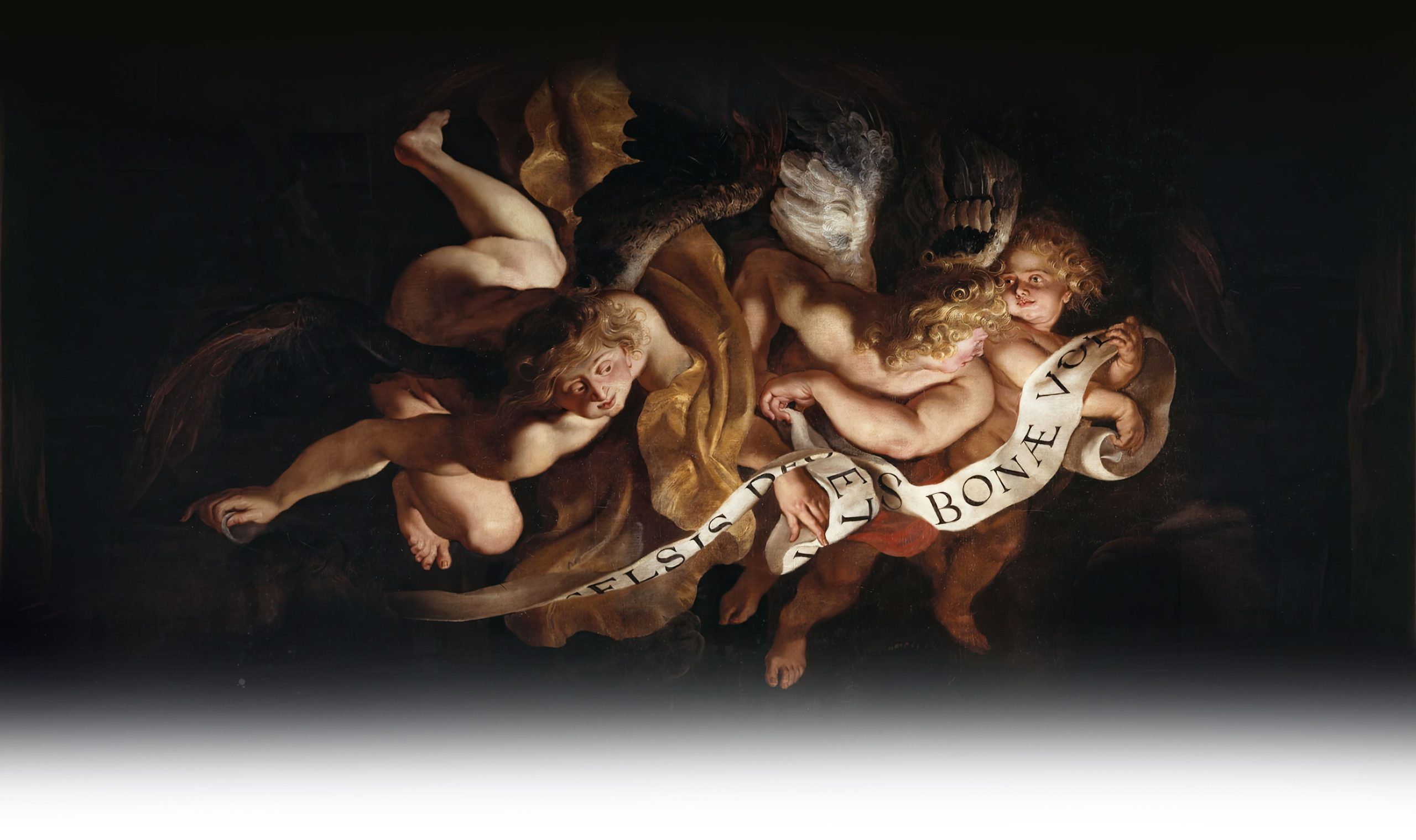
Pieter Paul Rubens, Adorazione dei Pastori, (Particolare), 1608, Olio su tela, Chiesa di San Paolo, Anversa